
Lanolin is produced from wool grease, a natural waxy substance recovered during the processing and washing of sheep’s wool. The recovered wool grease undergoes several refining and purification steps to remove impurities and produce refined lanolin.
The production process can roughly be divided into three main stages: recovery of wool grease, refining, and further purification according to the required lanolin quality grade.
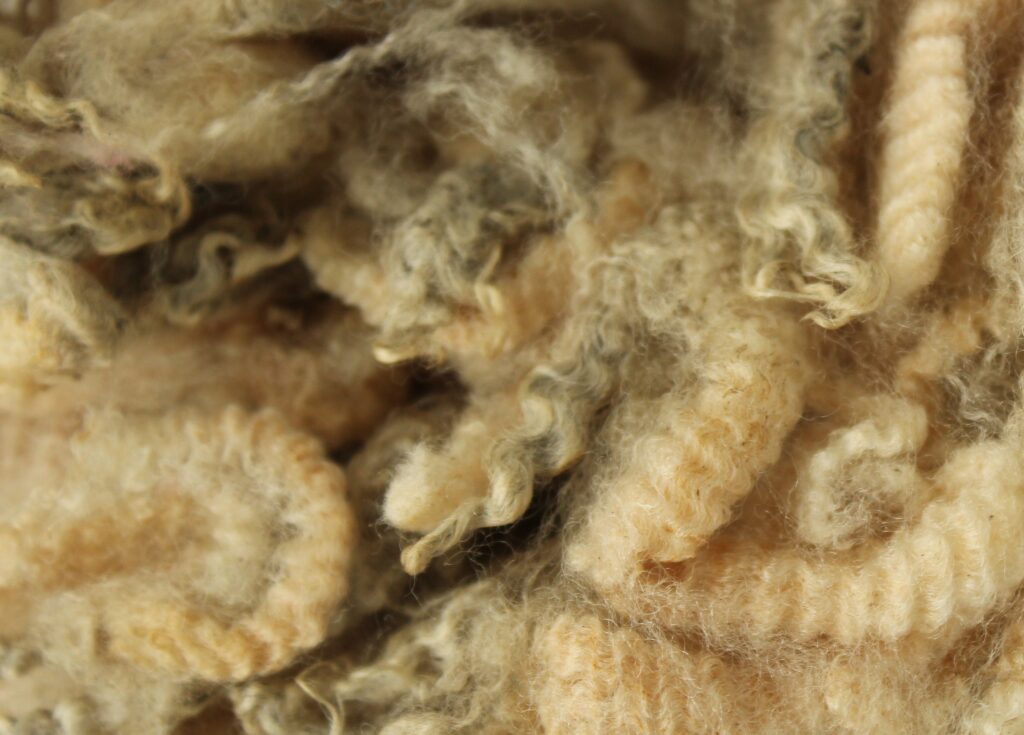
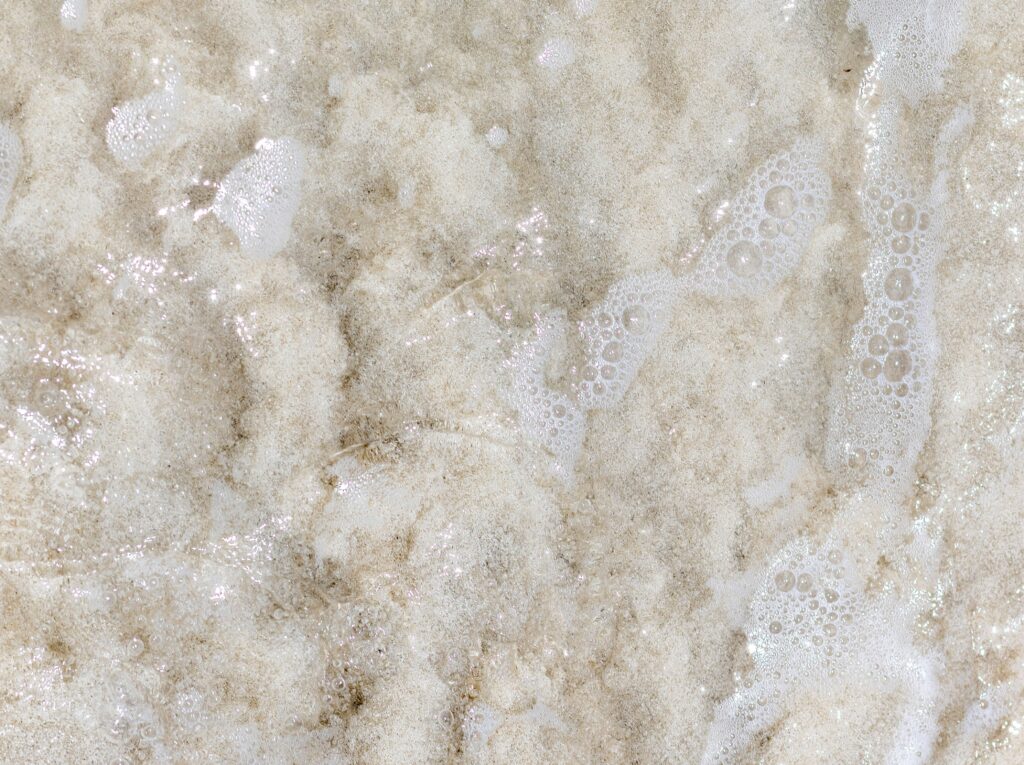
Wool grease is naturally present on sheep’s fleece and is recovered as a by-product during wool processing. After shearing, the raw wool is washed in a process known as scouring, which removes wool grease together with dirt, salts and other impurities from the fleece.
The wool grease is then separated from the scouring water. Gravity separation and centrifugation help remove water and heavier impurities, producing crude wool grease. This recovered material forms the starting point for further refining into lanolin.
Crude wool grease is a dark, highly viscous material containing free fatty acids, soaps and other impurities. Refining reduces these components and transforms the recovered wool grease into purified lanolin with more consistent colour, odour and quality.
The refining process can include neutralisation of free fatty acids, extraction of soaps and treatment with adsorbents followed by filtration. Further processing under vacuum helps reduce residual odour and unwanted residues. The exact refining sequence can vary depending on the raw material and the required quality of the finished lanolin.
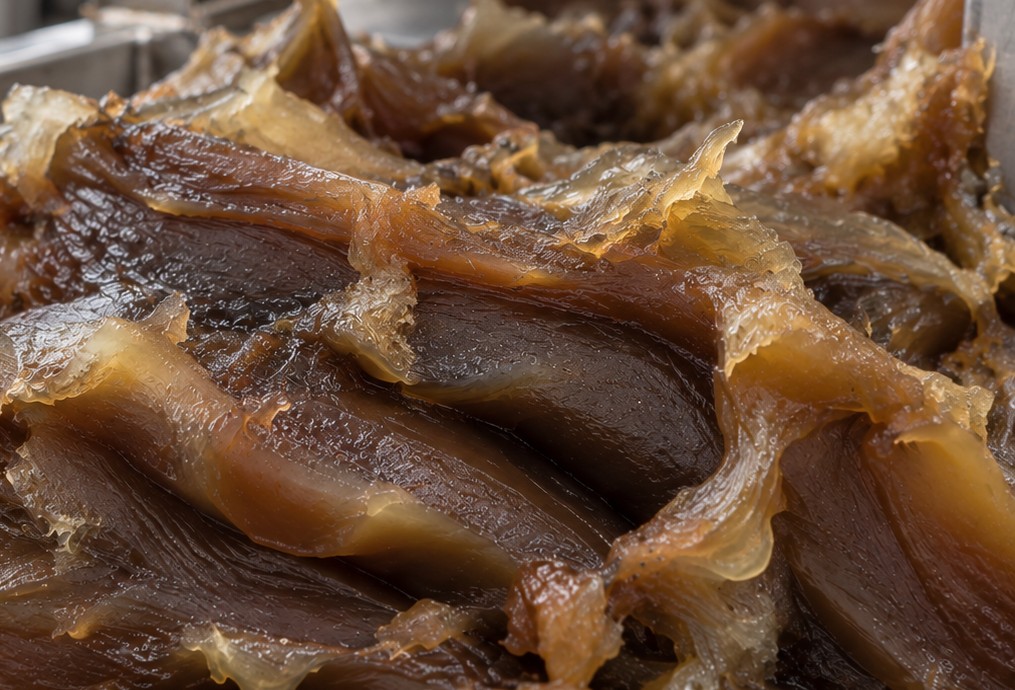
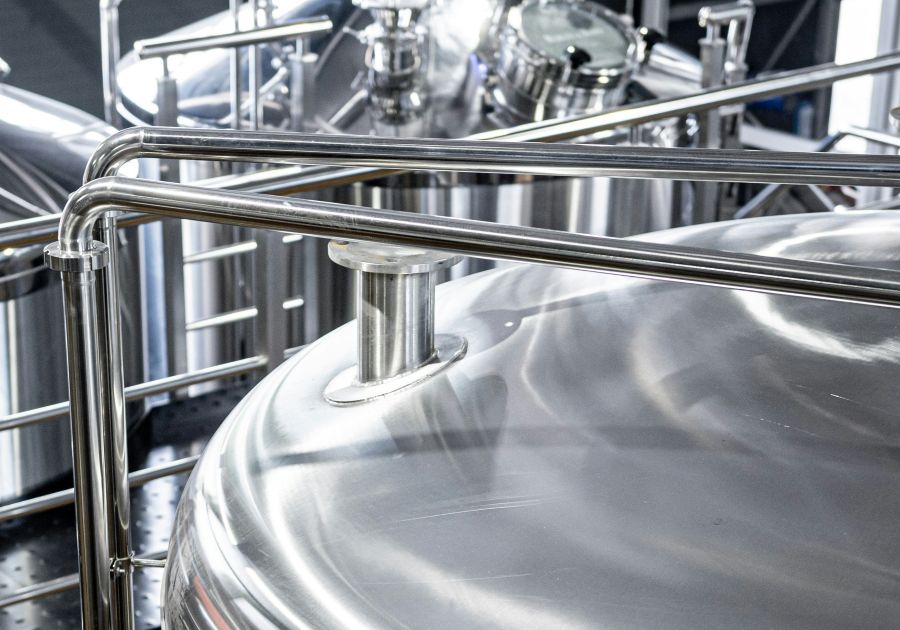
Further purification helps refine key quality characteristics of lanolin, including colour, odour, moisture content and purity. Depending on the required grade, additional processing steps may include colour treatment, deodorisation and vacuum drying.
Refined lanolin is available in different quality grades and specifications, including cosmetic and pharmaceutical grades. Pharmaceutical grades can be produced to meet defined pharmacopoeial requirements, while customized grades can be manufactured according to individual customer specifications.
Component
Crude centrifugal wool grease
Refined pharmaceutical lanolin
Water
Crude centrifugal wool grease:
1-5% w/w
Refined pharmaceutical lanolin:
0.05% w/w
Free fatty acids
Crude centrifugal wool grease:
1-8% w/w
Refined pharmaceutical lanolin:
0.30% w/w
Free fatty alcohols
Crude centrifugal wool grease:
6-12% w/w
Refined pharmaceutical lanolin:
2.50% w/w
Wax esters
Crude centrifugal wool grease:
75-90% w/w
Refined pharmaceutical lanolin:
97.0% w/w
Water soluble salts of potassium and sodium
Crude centrifugal wool grease:
0.1-0.2 w/w
Refined pharmaceutical lanolin:
not quantified
Lipid soluble salts of calcium, magnesium, iron, aluminium
Crude centrifugal wool grease:
0.2-2.0 w/w
Refined pharmaceutical lanolin:
not quantified
Detergent residues
Crude centrifugal wool grease:
0.1-1.0 w/w
Refined pharmaceutical lanolin:
0.02% w/w
Pesticide residues
Crude centrifugal wool grease:
20-150 mg kg-1
Refined pharmaceutical lanolin:
0.8 mg kg-1
Polyaromatic hydrocarbons
Crude centrifugal wool grease:
0.1-0.5 mg kg-1
Refined pharmaceutical lanolin:
0.08 µg kg-1
Particulate insoluble matters
Crude centrifugal wool grease:
0.1-2.0
Refined pharmaceutical lanolin:
not quantified
Peroxide value
Crude centrifugal wool grease:
not quantified
Refined pharmaceutical lanolin:
12.0 meq. kg-1
Colour
Crude centrifugal wool grease:
dark brown
Refined pharmaceutical lanolin:
pale to yellow
Odour
Crude centrifugal wool grease:
peculiar smell
Refined pharmaceutical lanolin:
almost odorless
Source: E.W. Clark 1999, ‘The History and Evolution of Lanolin’

Chris Wessel
Sales Director
Chris Kommerowski Sales Director
Marco Heins Sr. Sales Manager
Kruna Ramljak Product Manager
Christina Wegener Logistics & Sales Manager
Petra Pingel Sales Manager Natural Lipids & Logistics Manager
Julian Gruß Logistics Manager

Chris Kommerowski
Sales Director

Marco Heins
Sr. Sales Manager

Kruna Ramljak
Product Manage
